Gate Parts & Welding in San Antonio, TX
If a gate on your San Antonio property is dragging, leaning, corroding, or simply won’t latch anymore, the cause is almost always a structural or hardware problem that a coat of paint won’t fix. Our Gate Parts & Welding team at Precision Gate Repair Experts Von Ormy diagnoses the root failure — soil movement, fractured welds, failed hinges, deteriorated posts — and repairs it correctly the first time. Call us at (830) 541-7476 for a free estimate, and we’ll get eyes on your gate fast.
Why Precision Gate Repair Experts Von Ormy Is San Antonio’s Preferred Gate Parts & Welding Company
We’ve built a strong reputation across San Antonio by treating every job as a structural problem to solve, not a service ticket to close. Edward Harris, Owner & Lead Technician, leads every significant job personally — you’re getting the decision-maker on your property, not a subcontractor who has to call someone else when the diagnosis gets complicated. That accountability shows in the numbers: 613 verified customers have rated us 4.9 stars, and a meaningful share of those reviews come from San Antonio homeowners in the inner-city ZIP corridor who were told by other contractors the job was “too involved.” Twelve years of exclusive gate-trade experience means we arrive in San Antonio already knowing what clay-soil heave does to post collars, what HDRC overlay rules require, and which low-hydrogen rod is correct for aged wrought iron — details a generalist simply doesn’t carry.
Our Gate Parts & Welding Services in San Antonio
Custom Welding
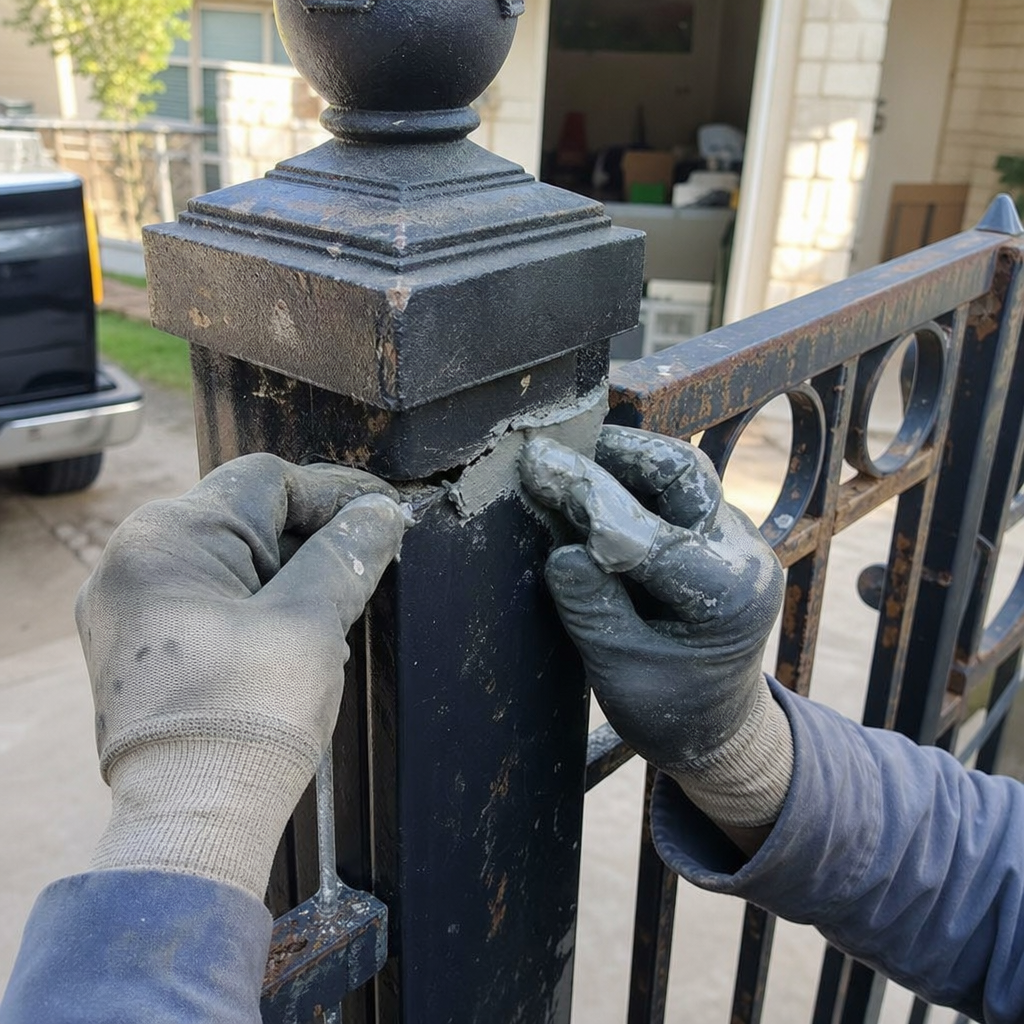
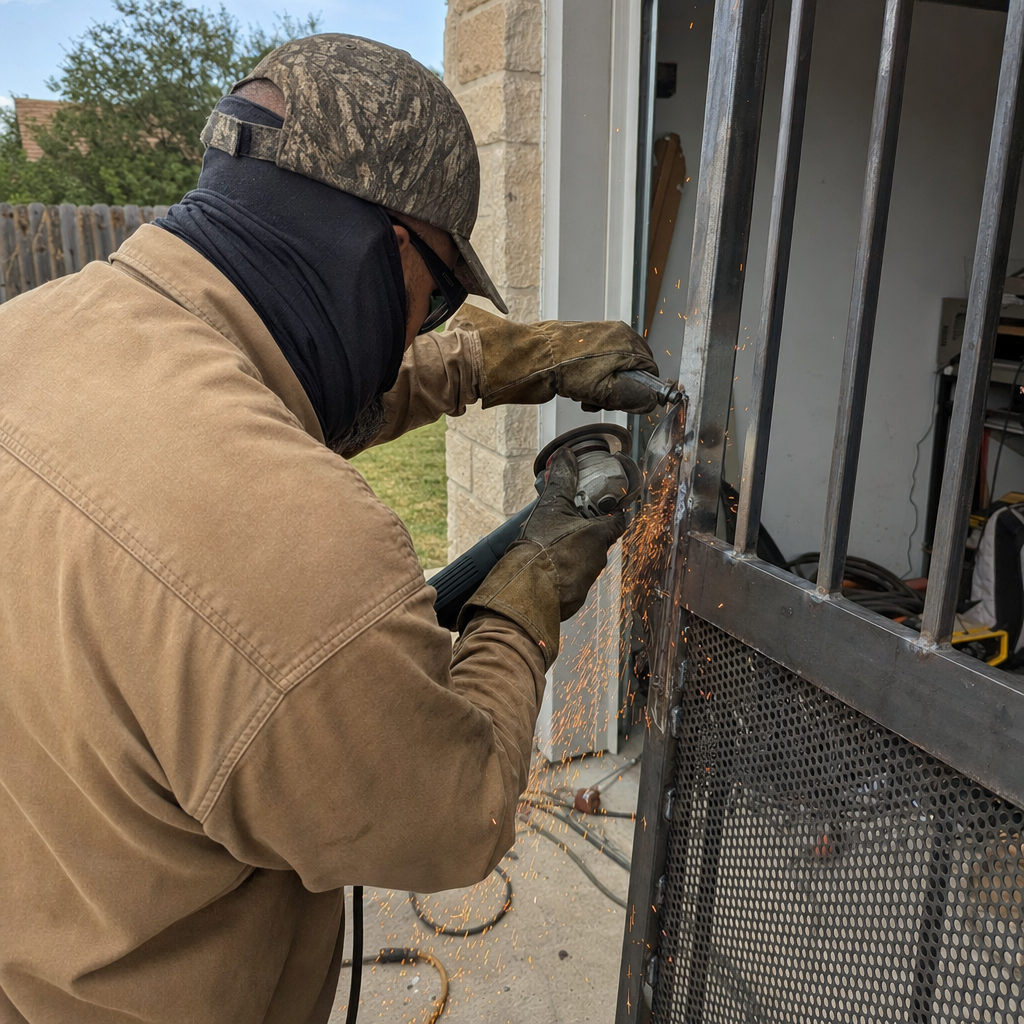
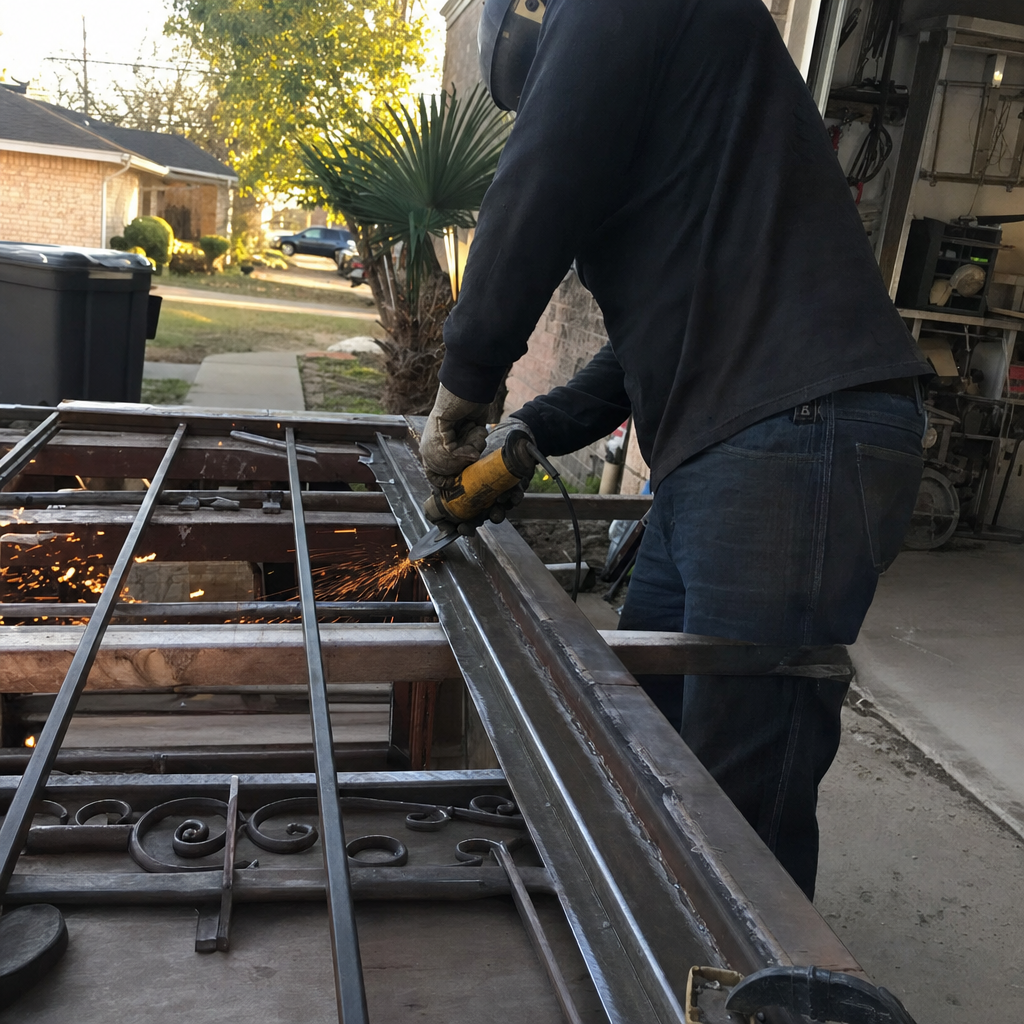
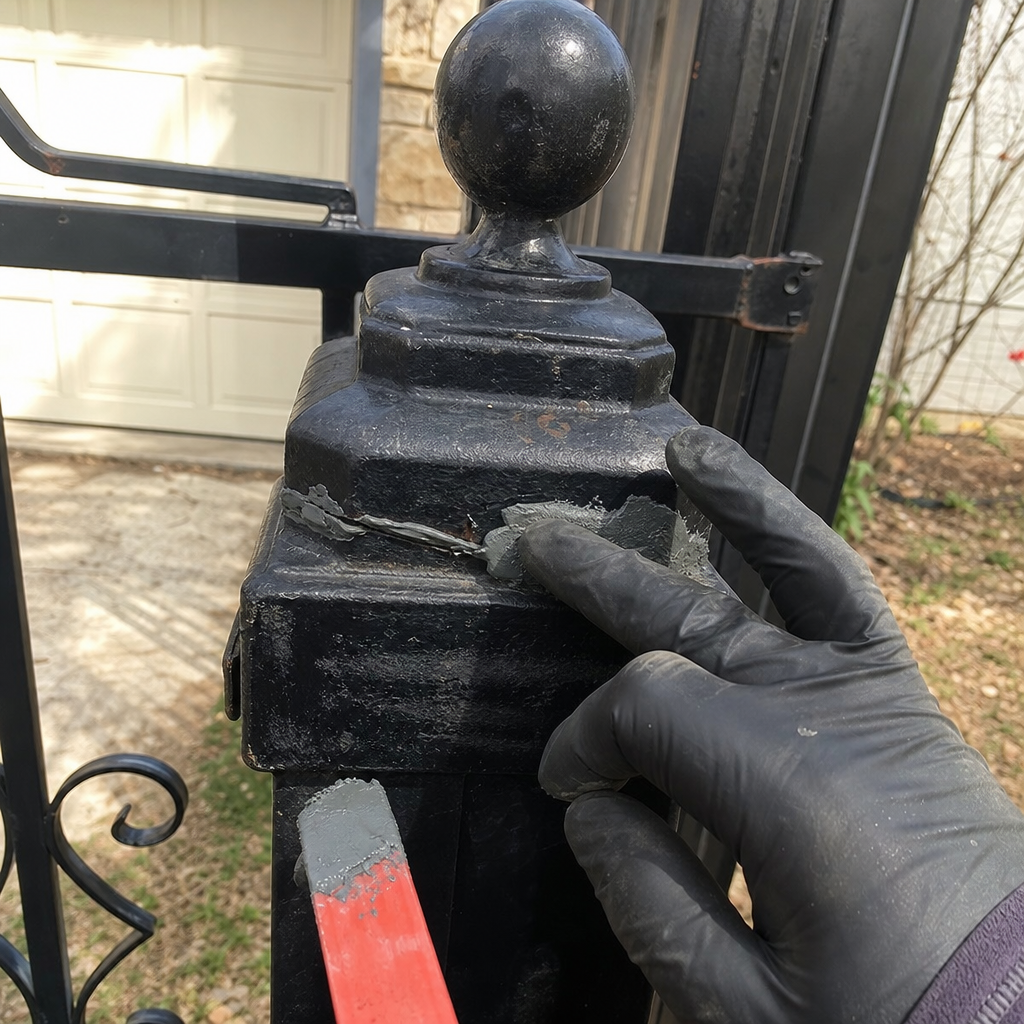
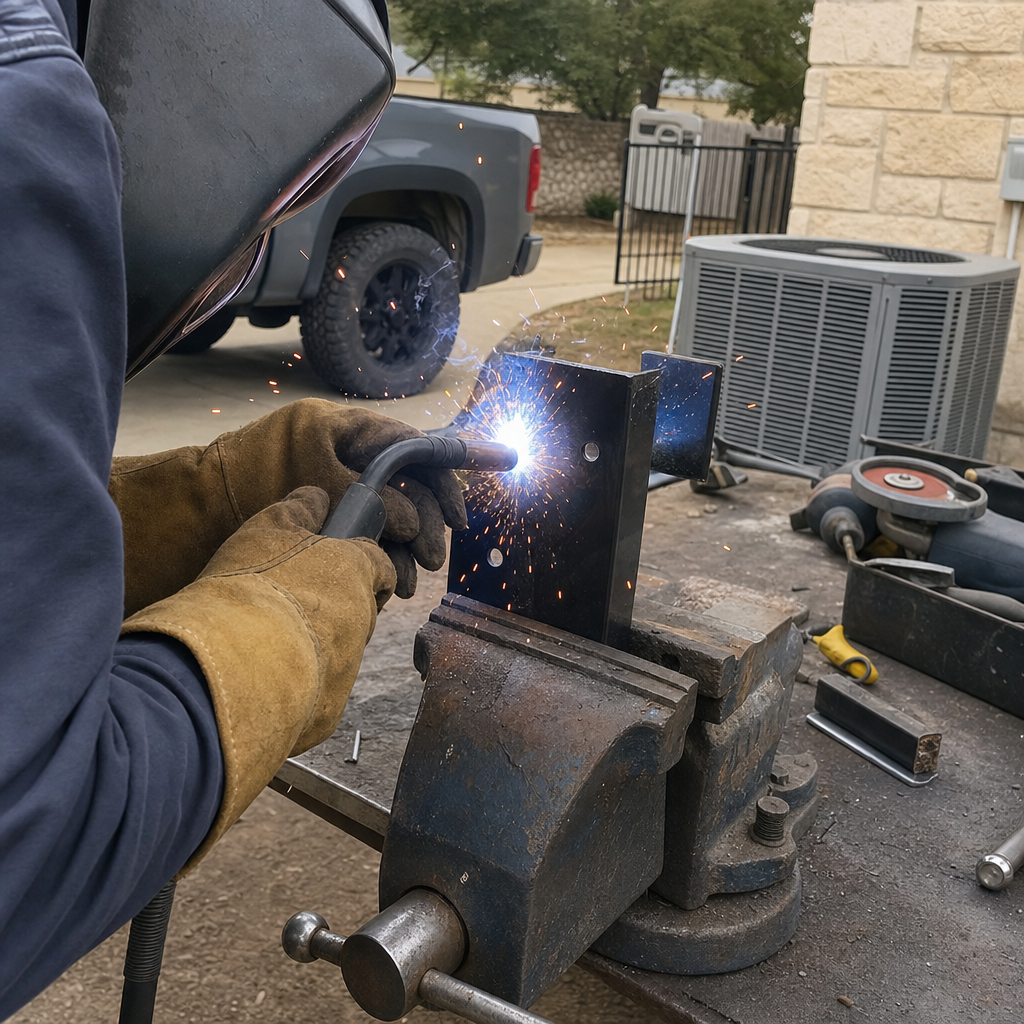
Custom welding is the service San Antonio’s inner-city neighborhoods demand most, and the one most contractors get wrong. In historic districts like Cattleman’s Square and Dignowity Hill, ornamental wrought iron gates carry deep oxidation pits that a wire-brush-and-paint approach cannot resolve — skipping proper corrosion remediation before laying a bead traps moisture inside the weld, and the repair fails before the next summer’s heat cycle ends. We grind back to clean base metal, match the period profile of the ironwork, and use rod selection suited to the alloy we’re welding — so the repair satisfies both structural requirements and, where applicable, San Antonio’s Historic and Design Review Commission overlay standards.
Our field crews have seen firsthand what Winter Storm Uri’s sustained sub-freezing temperatures did to welds on iron gates never engineered for that kind of cold. We responded to a wrought iron gate on a late-1800s Victorian property in Dignowity Hill where the original bottom hinge had fractured clean through — a textbook cold-crack that had gone unaddressed for two seasons, leaving the gate dragging on a limestone caliche shelf only seven inches below grade. We ground the fractured collar back to clean metal, re-welded with a low-hydrogen rod suited to the aged wrought iron, then reseated the post using a rotary hammer rather than a standard auger to clear the caliche before pouring a proper footing. The gate swings level again, and the HDRC overlay was satisfied because we matched the period profile instead of substituting modern tube steel.
Post Replacement
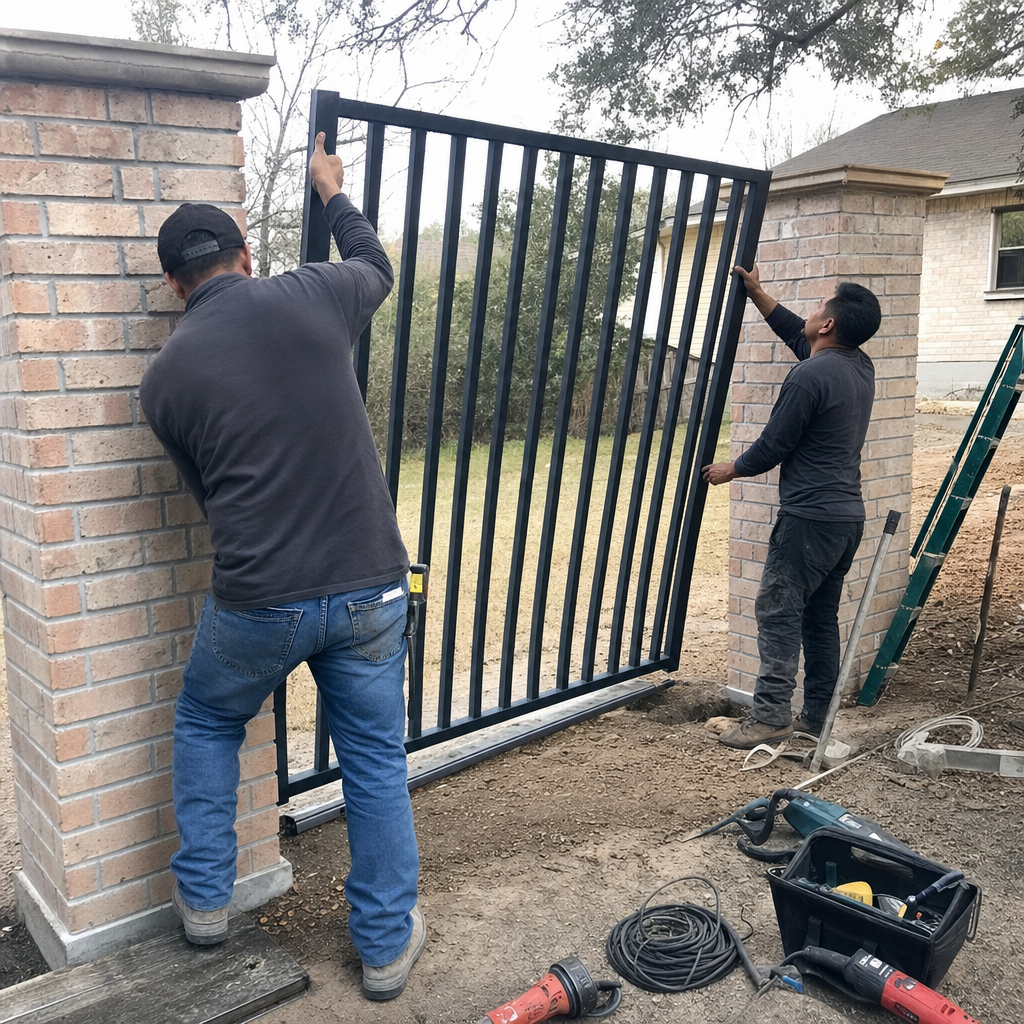
San Antonio sits on expansive Vertisol clay that contracts sharply during 100°F-plus summers and swells aggressively after rain, causing gate posts throughout the 78202–78208 ZIP corridor to heave, lean, and bind latches on a seasonal cycle more severe than in comparable Texas cities. That movement shears tack welds at hinge plates before the hardware itself wears out — a failure pattern driven by geology, not gate age. When we replace a post in Government Hill or the Arsenal district, we account for the 6-to-8-inch limestone caliche shelf that sits just below grade: we bring a rotary hammer, not a standard post-hole digger, because a post that can’t reach proper depth will lean again after the first hard rain swells the surrounding clay. Contractors who skip that step end up with dangerously under-set posts and a callback they could have avoided.
Hinge Replacement
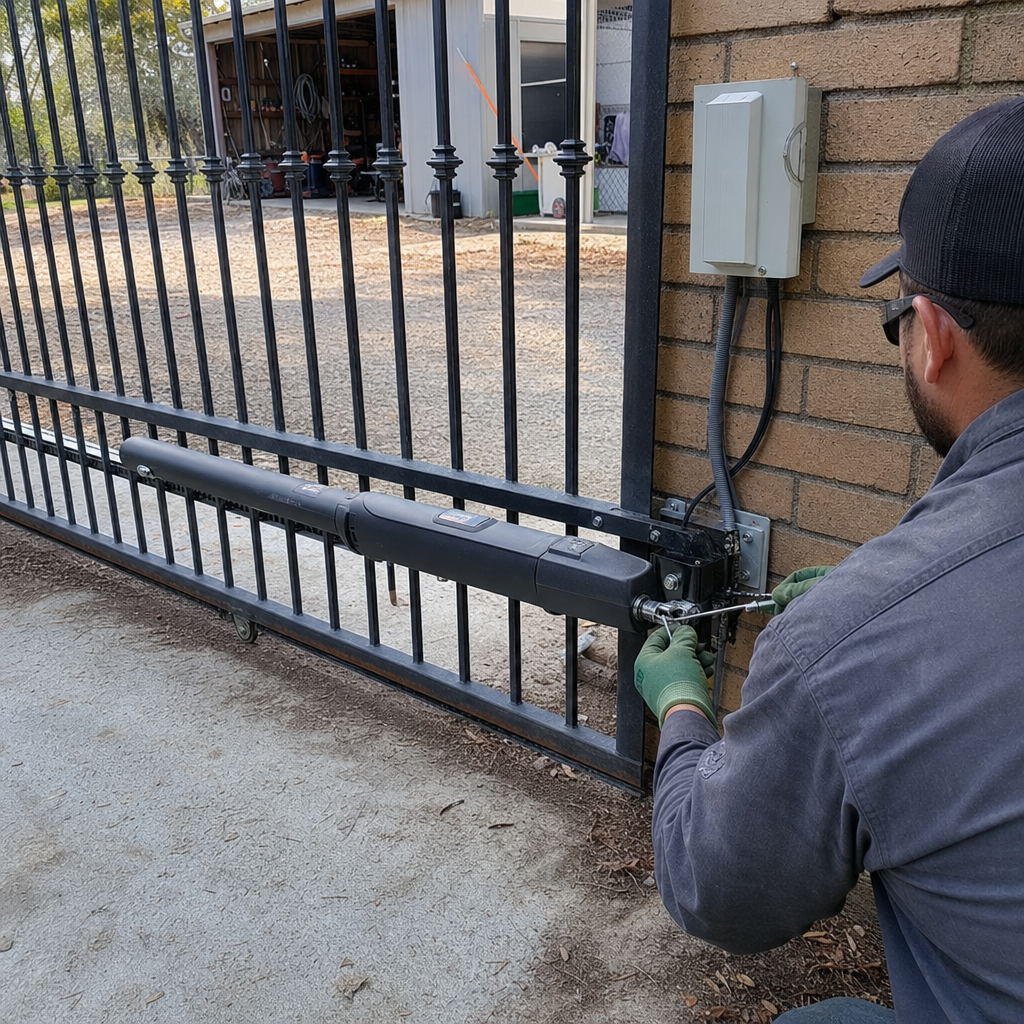
Hinge failure in San Antonio’s older housing stock follows a predictable pattern: seasonal clay movement flexes the gate frame repeatedly, fatigue cracks develop at the hinge plate collar, and eventually the hinge fractures — often quietly, over years, rather than in a single visible event. In the Victorian and Craftsman properties across Dignowity Hill and Denver Heights, original cast-iron or wrought-iron hinges are frequently still structurally sound in the barrel but cracked at the weld point, making replacement a welding job rather than a simple hardware swap. We fabricate period-matching hinge plates when catalog replacements won’t fit the original pintle geometry, keeping the gate’s profile consistent with what the HDRC and the homeowner both expect.
Rail Repair & Gate Rollers
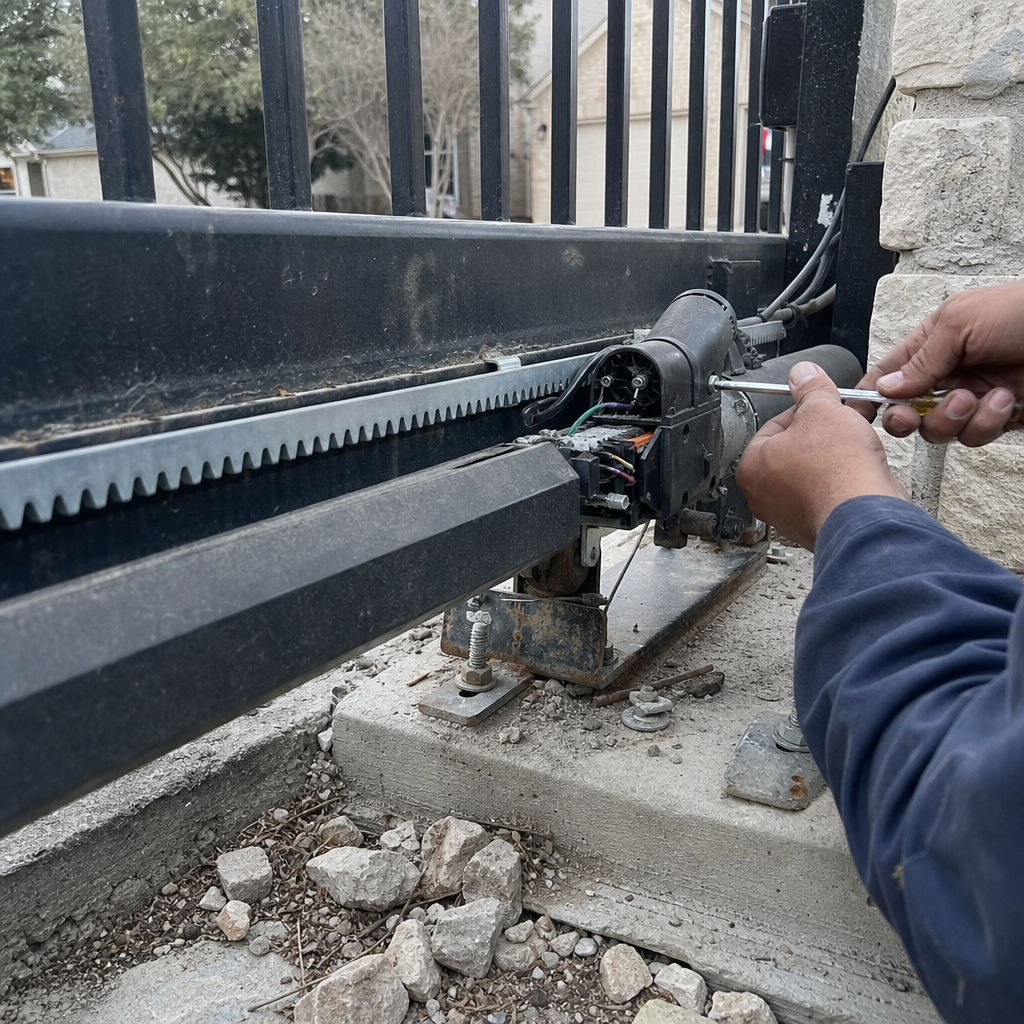
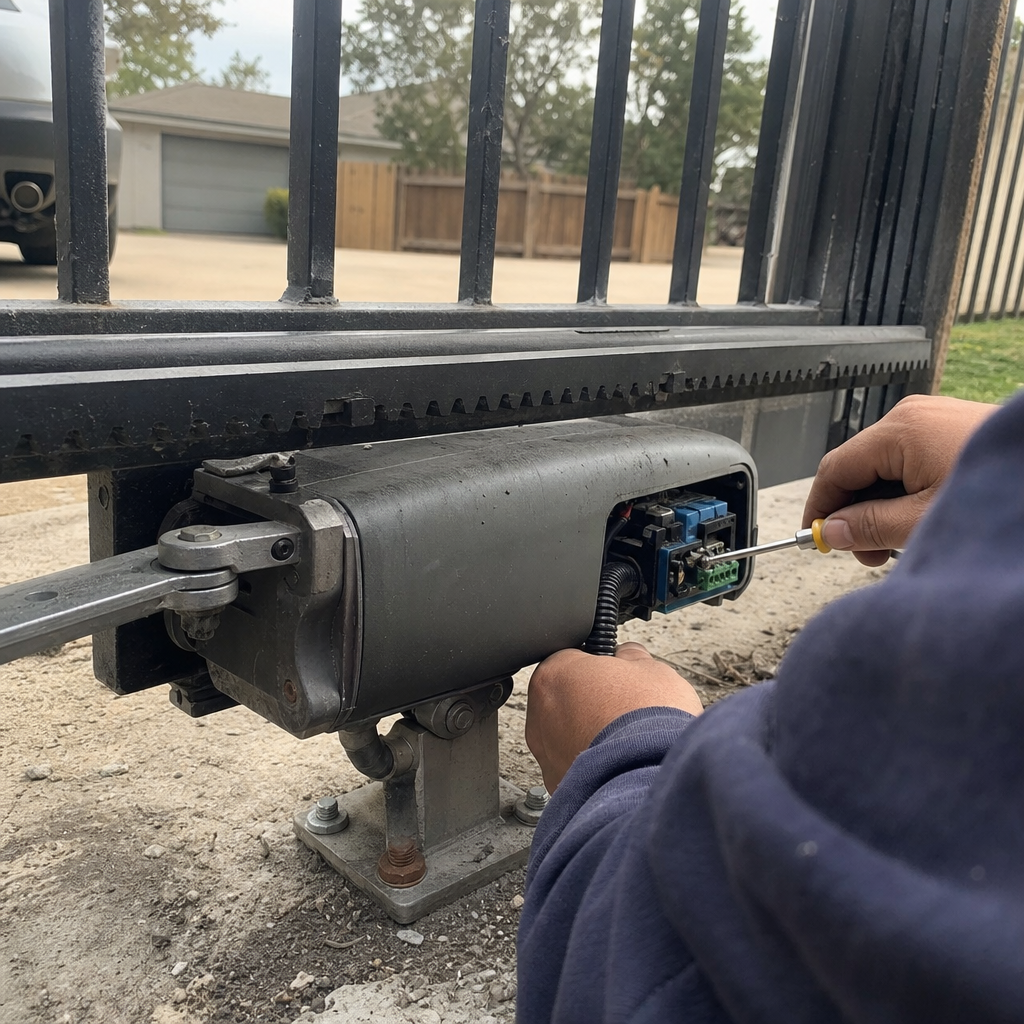
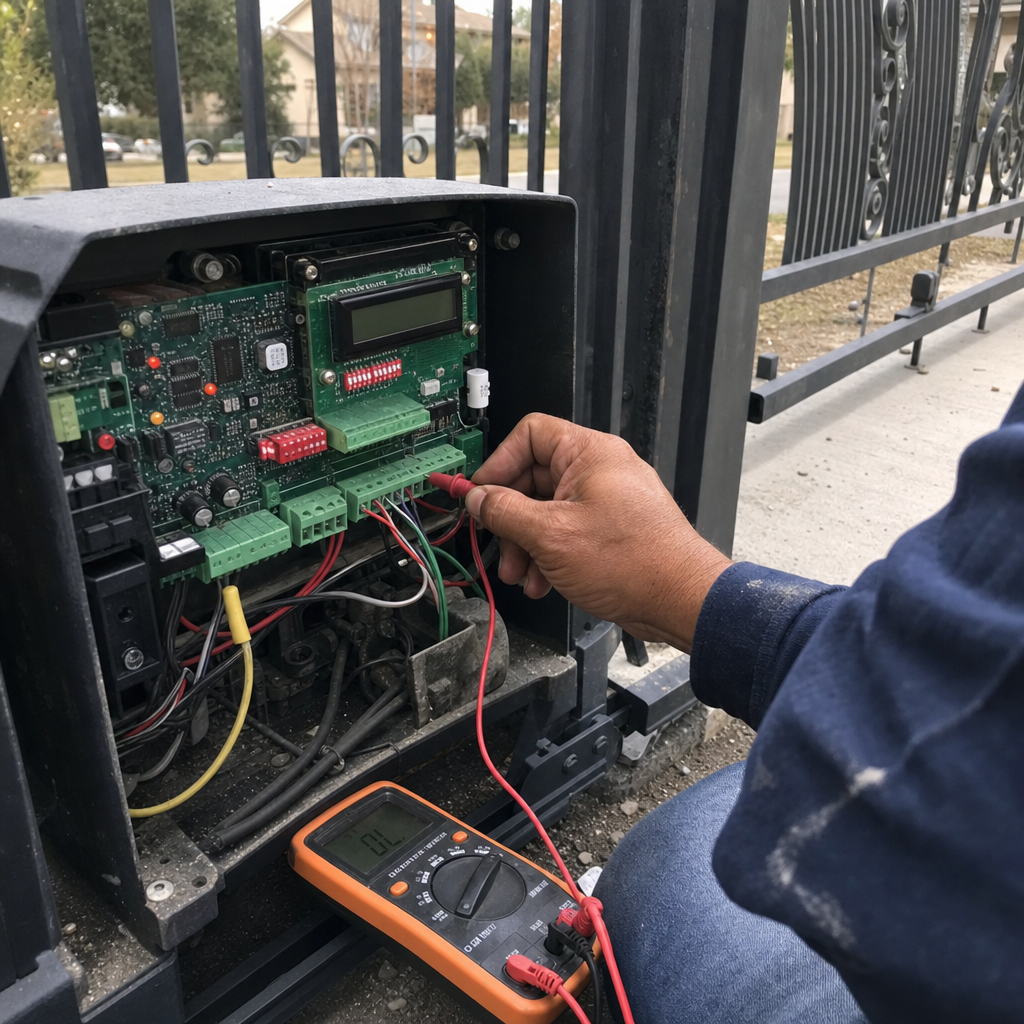
Slide gates on San Antonio commercial and residential properties take a particular beating from clay-soil movement — when the ground beneath a rail shifts seasonally, the rail itself warps, and rollers that were tracking cleanly develop flat spots and binding that accelerates wear on the gate motor. A typical rail repair in San Antonio runs $150–$380 depending on linear footage and whether the rail anchor points need to be reset as part of your Gate Installation — San Antonio project. Roller replacement on a slide gate runs $90–$220 per set. We stock nylon and steel roller options for the gate weights and rail gauges common in San Antonio’s mid-century commercial properties — no waiting on a parts order to get the repair done.
Latch & Lock Service
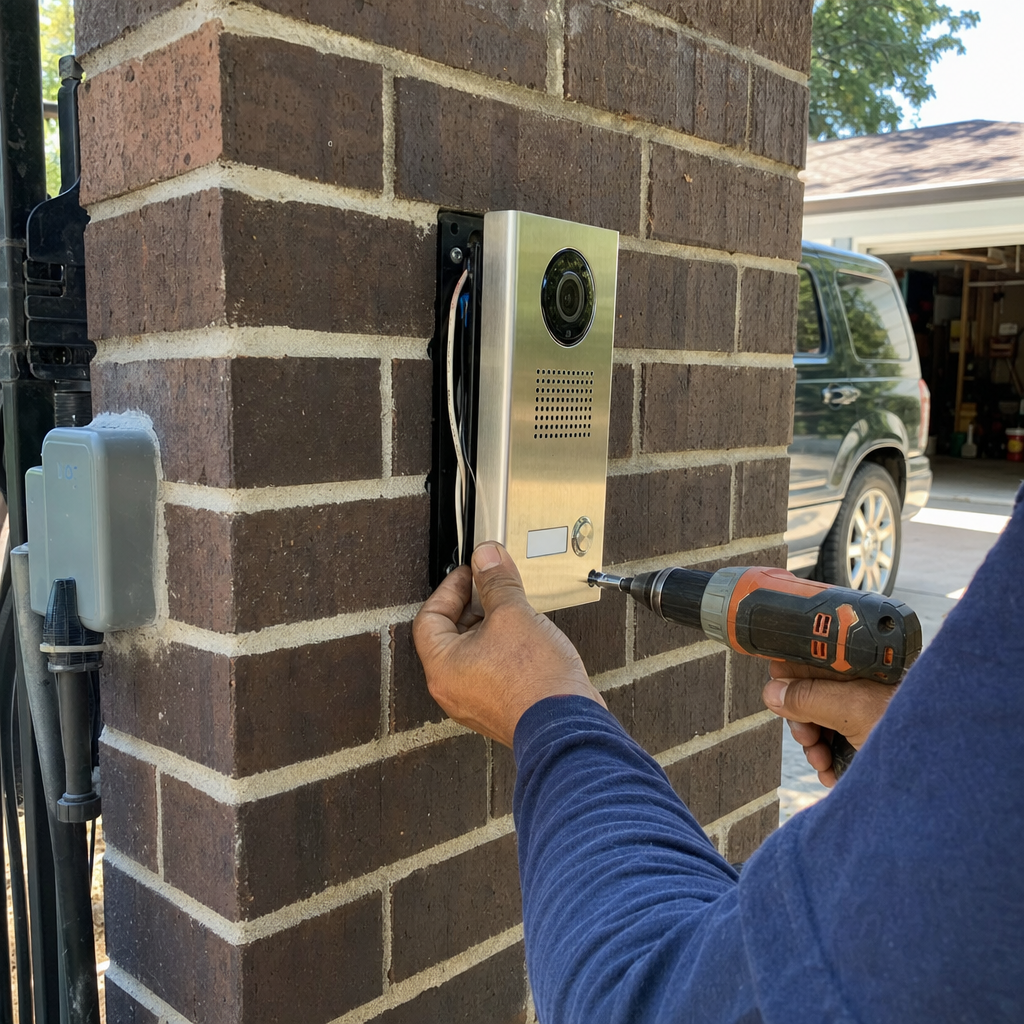
A latch that won’t catch in summer but binds shut in winter is a clay-soil problem disguised as a hardware problem — the post has moved, and the latch strike is no longer aligned. In the mid-century bungalows throughout 78207, tubular steel gates anchored to posts that have shifted visibly over decades of San Antonio’s soil movement are the most common latch complaint we handle. We realign the strike, re-drill or re-weld the keeper bracket as needed, and check the post plumb before leaving — because a latch fix that ignores why the latch failed won’t hold through the next drought cycle.
What happens when you call
- 1
A real person answersNo phone trees — you reach a local pro.
- 2
You get an upfront price rangeHonest numbers before anyone is dispatched.
- 3
A background-checked tech heads outLicensed & insured, dispatched right away.
- 4
You approve before work beginsNothing starts until you say go.
Trusted Brands We Service in San Antonio
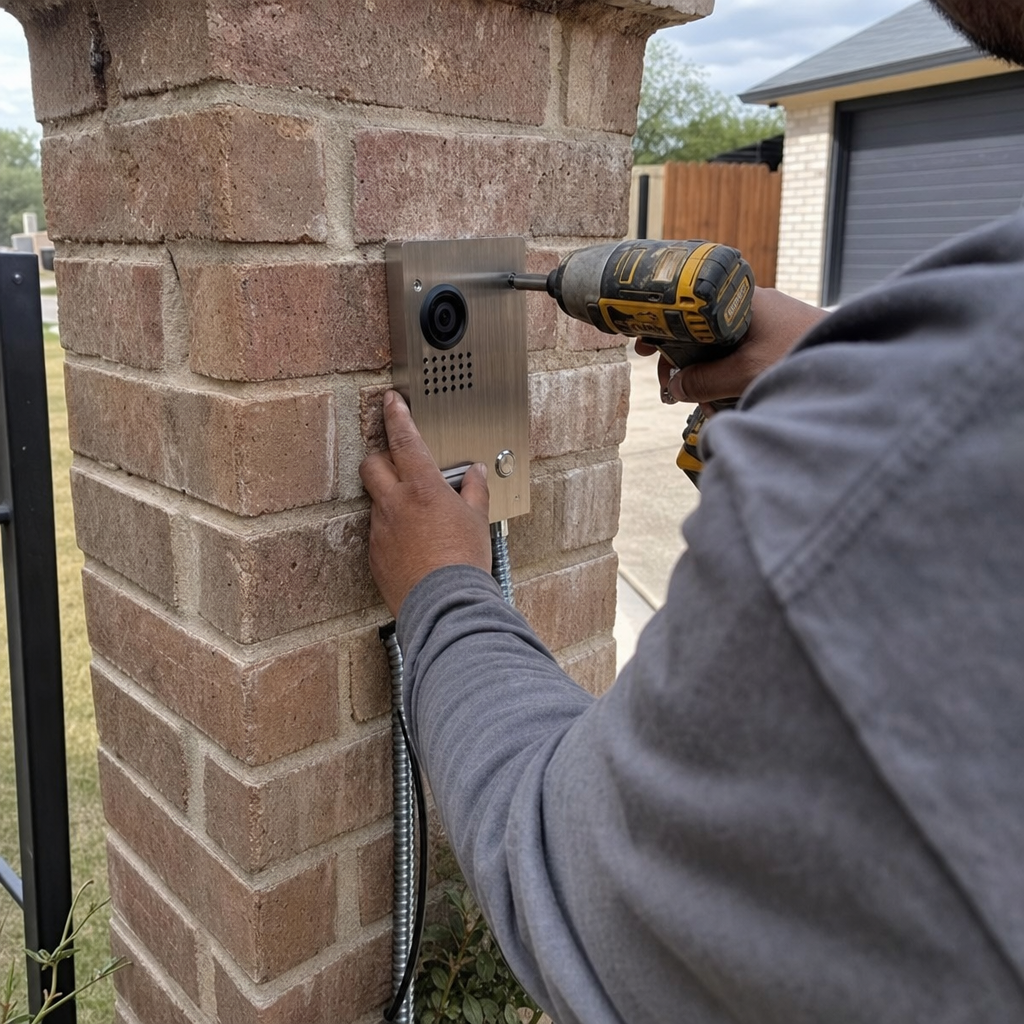
We work on LiftMaster, FAAC service in San Antonio, BFT, Linear, Viking, Ghost Controls, DoorKing, Elite, and Mighty Mule systems — brands that cover nearly every gate motor and access-control configuration found on San Antonio properties, from single-family swing gates in the 78204 historic blocks to DoorKing access panels on apartment complexes near Fort Sam Houston. Because we carry parts for these specific platforms rather than sourcing generically, most San Antonio jobs don’t require a second trip. If a part isn’t on the truck, we know exactly where to get it and how long it will take — and we’ll tell you upfront.
Common Gate Parts & Welding Problems We See in San Antonio Homes
- Clay-soil heave cracking hinge-plate welds. San Antonio’s Vertisol geology shifts gate posts out of plumb every drought-rain cycle, shearing tack welds at hinge collars before the hinge hardware itself wears out. This is endemic to the 78202–78208 ZIPs and shows up every spring in properties from Dignowity Hill to the Blue Star district — often after no single dramatic event the owner can point to.
- Deep oxidation pits on original ornamental wrought iron. The late-1800s to early-1900s iron gates in San Antonio’s inner-city neighborhoods are frequently still structurally sound beneath the corrosion, but the pitting runs too deep for surface treatment to address. Welding over unremiated pits traps moisture and guarantees a repeat failure within one summer.
- Winter Storm Uri cold-crack legacy damage. February 2021’s sustained sub-freezing temperatures cracked welds and seized hinges on iron gates never rated for that exposure. Many of those fractures were small enough that owners kept using the gate — until seasonal movement opened the crack further. We still find Uri-origin damage on first visits to older San Antonio iron installations.
- Under-set replacement posts in caliche-heavy soils. Contractors who swap a post in Government Hill without clearing the limestone caliche shelf set footings that are dangerously shallow — sometimes less than 10 inches total depth. The gate appears plumb on install day and leans noticeably after the first significant rainfall swells the surrounding clay.
San Antonio’s Spanish Colonial Heritage and HDRC Overlay Work
San Antonio’s Spanish colonial architectural heritage makes ornamental wrought iron gates — historically called rejas — a defining fixture across inner-city neighborhoods like Dignowity Hill, Cattleman’s Square, and Hemisfair-area properties. Repair work in these blocks routinely demands corrosion restoration and period-accurate fabrication rather than simple hardware swaps: the gate profile, picket spacing, and collar geometry are part of what the Historic and Design Review Commission evaluates. Properties within HDRC overlay zones in the 78204–78210 ZIPs require permit approval before altering or replacing gates, and contractors unfamiliar with that process will stall jobs in the most densely gated historic blocks in San Antonio. We know the HDRC process, we document our material matches, and we’ve completed welding and post-replacement work in overlay zones without triggering compliance holds. That’s not a small thing when your property sits in a block where the gate is part of the historic character of the streetscape.
Pricing for Gate Parts & Welding in San Antonio, TX
Pricing in San Antonio’s market reflects both the labor complexity of older iron and the soil conditions that add steps to post work. Here are honest ranges based on what we actually charge:
- Hinge replacement (single hinge, welded): $120–$280
- Hinge replacement (fabricated period-match): $220–$450
- Post replacement (standard, no caliche obstruction): $350–$650
- Post replacement (caliche shelf, rotary hammer required): $500–$850
- Custom welding — crack or fracture repair: $180–$420 depending on weld length and material prep required
- Rail repair: $150–$380
- Roller replacement: $90–$220 per set
- Latch & lock realignment or replacement: $85–$195
Corrosion remediation on historic wrought iron adds $80–$200 to a welding job when pitting is deep enough to require grinding and prep before the bead goes down — skipping it costs more in the long run. Call (830) 541-7476 for a free, no-obligation estimate; Edward Harris or a senior tech will assess the actual condition before quoting.
We Also Serve Cities Near San Antonio
In addition to San Antonio, our Gate Parts & Welding services extend to nearby communities including Lackland Air Force Base, where we regularly service residential and Gate Access Control in San Antonio systems for on-base housing and adjacent neighborhoods. If your property falls just outside the San Antonio city limits, call us — we’re likely already working in your area.
Serving San Antonio, TX — Our Local Coverage Area
We’re based in the San Antonio area and know this community well. Use the map below to see our service coverage — if you’re nearby, we can almost certainly help.
FAQs — Gate Parts & Welding in San Antonio
Yes — properties within HDRC overlay zones in San Antonio, including much of the 78204 ZIP and adjacent historic districts like Dignowity Hill, require permit approval before structural alterations or replacements to a gate. Welding a crack or re-hanging a hinge on an existing gate typically falls below the threshold that triggers a full permit, but replacing a post or fabricating a new gate panel in an overlay zone generally does require review. We document material matches and profile specifications as part of our scope on HDRC-affected properties, so the approval process doesn’t become a project delay. Call (830) 541-7476 and tell us the address — we’ll tell you where your job falls.
Straightening is sometimes possible, but in Government Hill it’s rarely the right answer on its own. The lean is almost always caused by clay-soil heave against a post footing that either wasn’t deep enough at install or couldn’t penetrate the limestone caliche shelf that sits 6–8 inches below grade in that area. If the post is plumb after straightening but the footing condition hasn’t changed, it will lean again after the next wet season — usually within a year. We evaluate whether the post itself is structurally sound and whether the footing can be improved in place before recommending full replacement. Full replacement in a caliche zone runs $500–$850. Call (830) 541-7476 for a free assessment.
Not always — LiftMaster has a longer parts availability chain than most brands, and we stock components for older LiftMaster gate operators that aren’t on most distributors’ active lists. That said, the mid-century and early tubular-steel gates common in 78207 sometimes have bracket geometries and mounting configurations that don’t match any current catalog part. In those cases, yes, fabrication is the correct path — and it’s often faster and less expensive than waiting on a discontinued OEM part anyway. We’ll tell you honestly which route makes more sense after looking at the opener. Call (830) 541-7476 to schedule a diagnostic.
Winter Storm Uri dropped San Antonio into sustained sub-freezing temperatures that lasted far longer than the occasional hard freeze the city’s iron gates were originally designed to handle. Older wrought iron becomes brittle at low temperatures, and hinges that carried years of fatigue stress from clay-soil movement fractured under the thermal contraction — a cold-crack failure rather than a gradual wear failure. Moisture that had worked into oxidation pits also expanded as it froze, accelerating cracks from the inside out. Many of those fractures were small enough that owners continued using the gate, but two more seasons of seasonal movement have opened them further. If your ornamental iron gate in San Antonio was installed before 2000 and hasn’t been inspected since Uri, it’s worth a look.
Clay-soil movement affects rollers and rail hardware directly. When the ground beneath a rail anchor shifts seasonally, the rail warps out of true — and rollers that were tracking cleanly develop contact-point flat spots, bind under load, and transfer that stress to the gate motor, shortening its service life. In San Antonio’s 78201–78208 ZIPs, we regularly find rail systems that look intact but are running two to four degrees out of level because of soil movement that happened gradually over several drought-rain cycles. Roller replacement alone won’t fix it if the rail isn’t reset. We check rail level on every slide gate service call in San Antonio — it takes ten minutes and it’s the difference between a repair that holds and one that doesn’t.
Reviewed by Edward Harris, Owner & Lead Technician at Precision Gate Repair Experts Von Ormy, serving San Antonio, TX and surrounding communities for 12 years.